
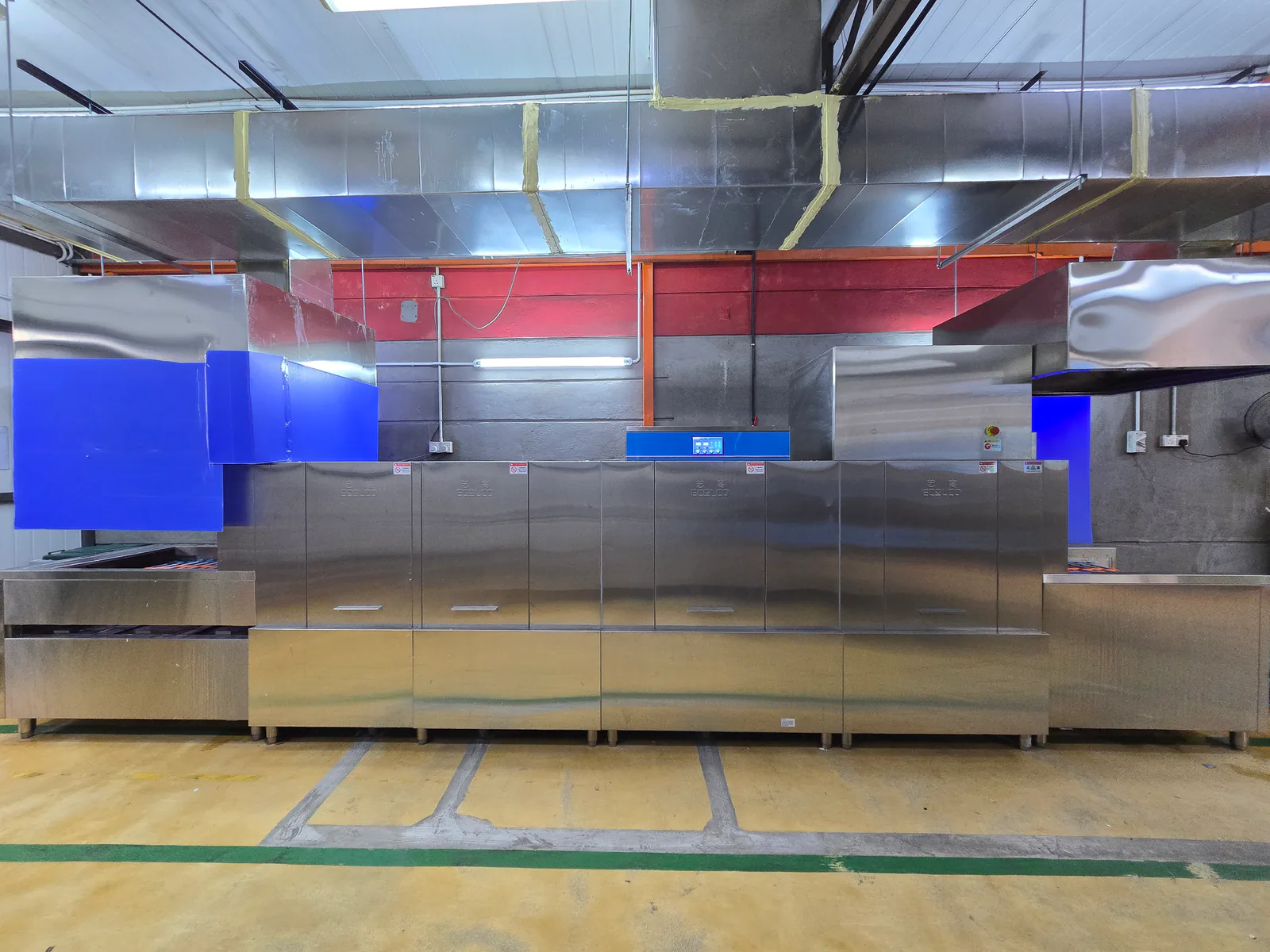
Commercial dishwasher maintenance involves daily cleaning, weekly inspections, monthly checks and scheduled professional servicing. Regular maintenance helps prevent clogged filters, blocked spray arms, limescale build-up and unexpected breakdowns.
Malaysia's Food Hygiene Regulations 2009 require food premises to be cleaned daily and appliances to be maintained in good condition. Keeping a maintenance checklist also helps staff track completed tasks. For more information, read our article on commercial dishwasher hygiene and compliance in Malaysia.
Here’s a practical maintenance checklist to help your team keep the dishwasher in good condition, from daily cleaning to monthly checks and professional servicing.
Daily Maintenance
| Tasks | What to do |
|---|---|
| Drain and clean the tank | Drain the wash tank after service and remove food residue. |
| Clean filters and strainers | Remove food scraps, rinse the filters and refit them correctly. |
| Check spray arms | Inspect wash and rinse arms for blocked nozzles and clean as instructed in the manual. |
| Wipe the interior | Clean the walls, door and seals to prevent grease and dirt build-up. |
| Check chemicals and temperatures | Monitor detergent and rinse aid levels, along with wash and rinse temperatures during operation. |
Weekly Maintenance
| Tasks | What to do |
|---|---|
| Inspect door seals and hoses | Check for damage, cracks or water leaks. |
| Check for limescale | Look for white deposits inside the tank and on accessible spray arms. Descale according to the manufacturer's instructions. |
| Inspect spray nozzles | Check for remaining blockages and clean thoroughly where necessary. |
Monthly Maintenance
| Tasks | What to do |
|---|---|
| Perform a thorough cleaning | Clean accessible areas that may be missed during daily maintenance. |
| Inspect chemical dosing lines | Check visible detergent and rinse aid tubes for leaks, kinks or chemical build-up. |
| Review maintenance records | Look for recurring problems such as leaks, low temperatures or blockages. |
Professional Servicing
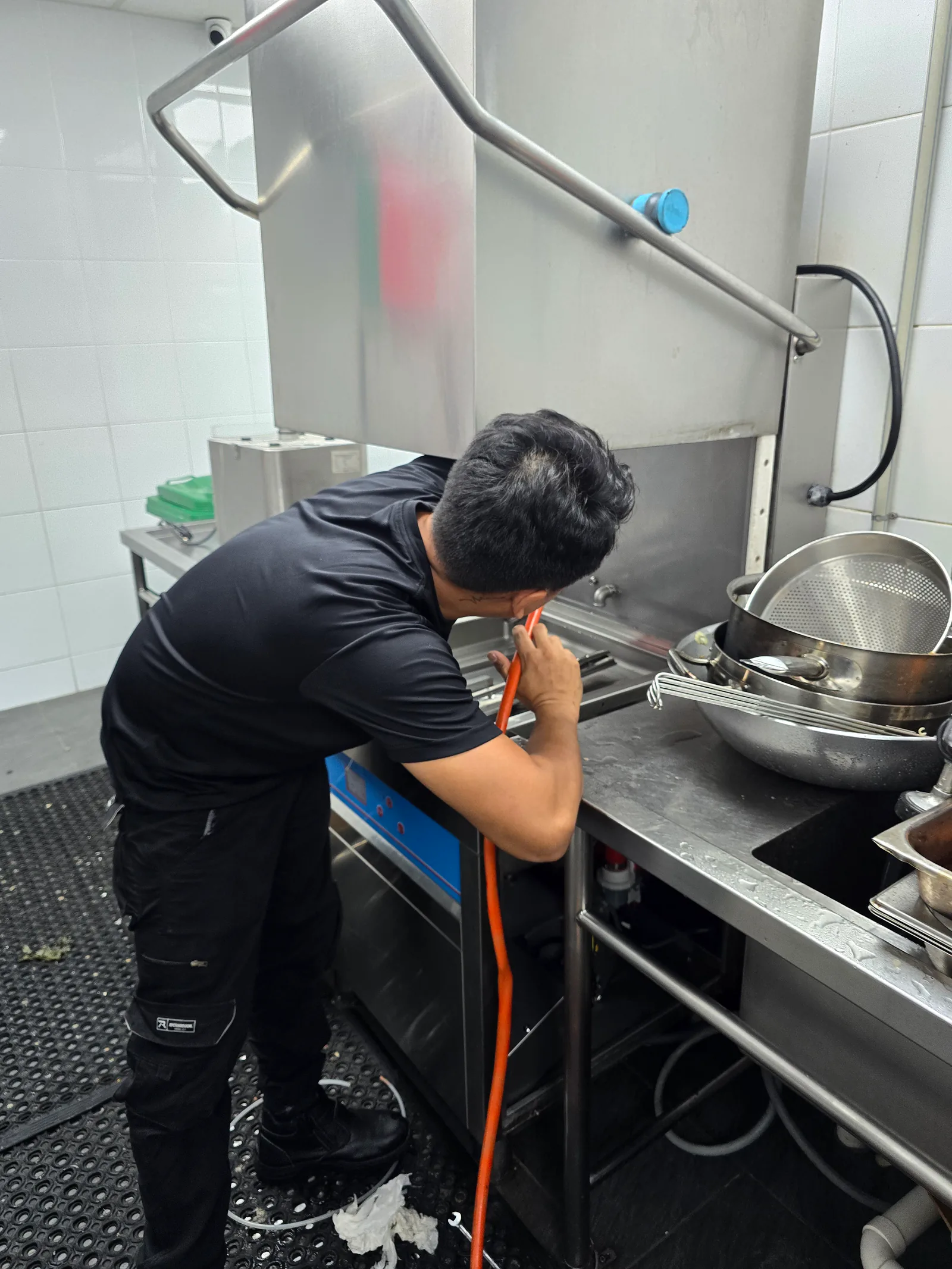
Arrange professional servicing according to the manufacturer's recommended schedule. A qualified technician should inspect internal components such as pumps, heating elements, thermostats, sensors and electrical connections.
Note: Maintenance requirements vary depending on the dishwasher model, frequency of use and water hardness. Always follow the manufacturer's cleaning and safety instructions.
Troubleshooting: What Your Team Can Fix and When to Call a Technician
Some commercial dishwasher problems can be resolved by kitchen staff, such as incorrect loading, blocked filters or empty detergent containers. However, problems involving electrical components, heating systems, pumps or internal parts should be handled by a qualified technician.
Before troubleshooting, follow the manufacturer's safety instructions. Staff should only check accessible parts and avoid opening panels or adjusting internal settings.
| Problem | What your team can check | When to call a technician |
|---|---|---|
| Dishes come out dirty or cloudy | Check rack loading, filters, spray nozzles, detergent and rinse aid levels. | Cleaning results remain poor after these checks. |
| Weak water spray | Check for blocked filters or spray arms. | Water pressure remains weak or the pump makes unusual noises. |
| Slow cycles or low temperatures | Check the temperature display and incoming hot-water supply, if applicable. | Temperatures remain low or cycles take longer than normal. |
| Poor drainage or unpleasant smells | Remove debris from accessible filters and drains. | Water remains in the machine or odor persists after cleaning. |
| Water leaks | Check that the door closes properly and the door seals are undamaged. | Leaks continue or water is found near internal components. |
| Unusual noises, error codes or failure to start | Check for loose dishes, an open door or interrupted water supply. Note any error code. | The problem persists, the machine will not start or a circuit breaker trips. |
When to stop using the dishwasher immediately
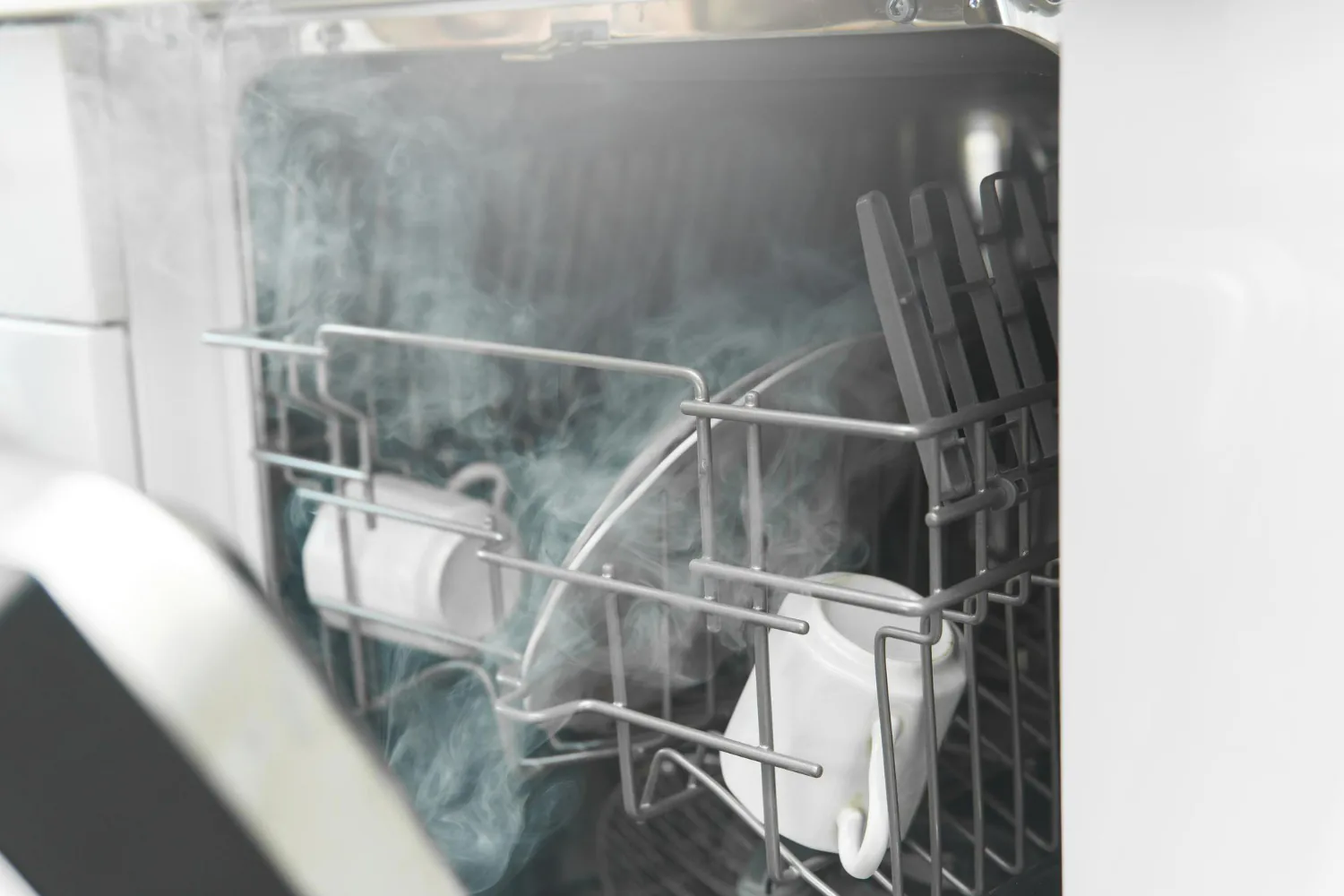
Stop using the machine if you notice:
- Smoke, sparks or a burning smell.
- Water leaking near electrical components.
- A circuit breaker repeatedly tripping.
- A strong or unusual chemical smell.
Switch off and isolate the machine if it is safe to do so. Do not attempt electrical repairs or open internal panels.
When contacting a technician, provide the dishwasher model, a description of the problem and any error codes displayed. This helps the technician identify the possible cause before inspection.
If your machine frequently breaks down, read our article on signs your commercial dishwasher needs repair or replacement.
Setting Up a Maintenance Routine for Your Team
A commercial dishwasher maintenance routine is easier to follow when staff know their responsibilities and when each task should be completed.
Here are four steps to help your kitchen team stay organised.
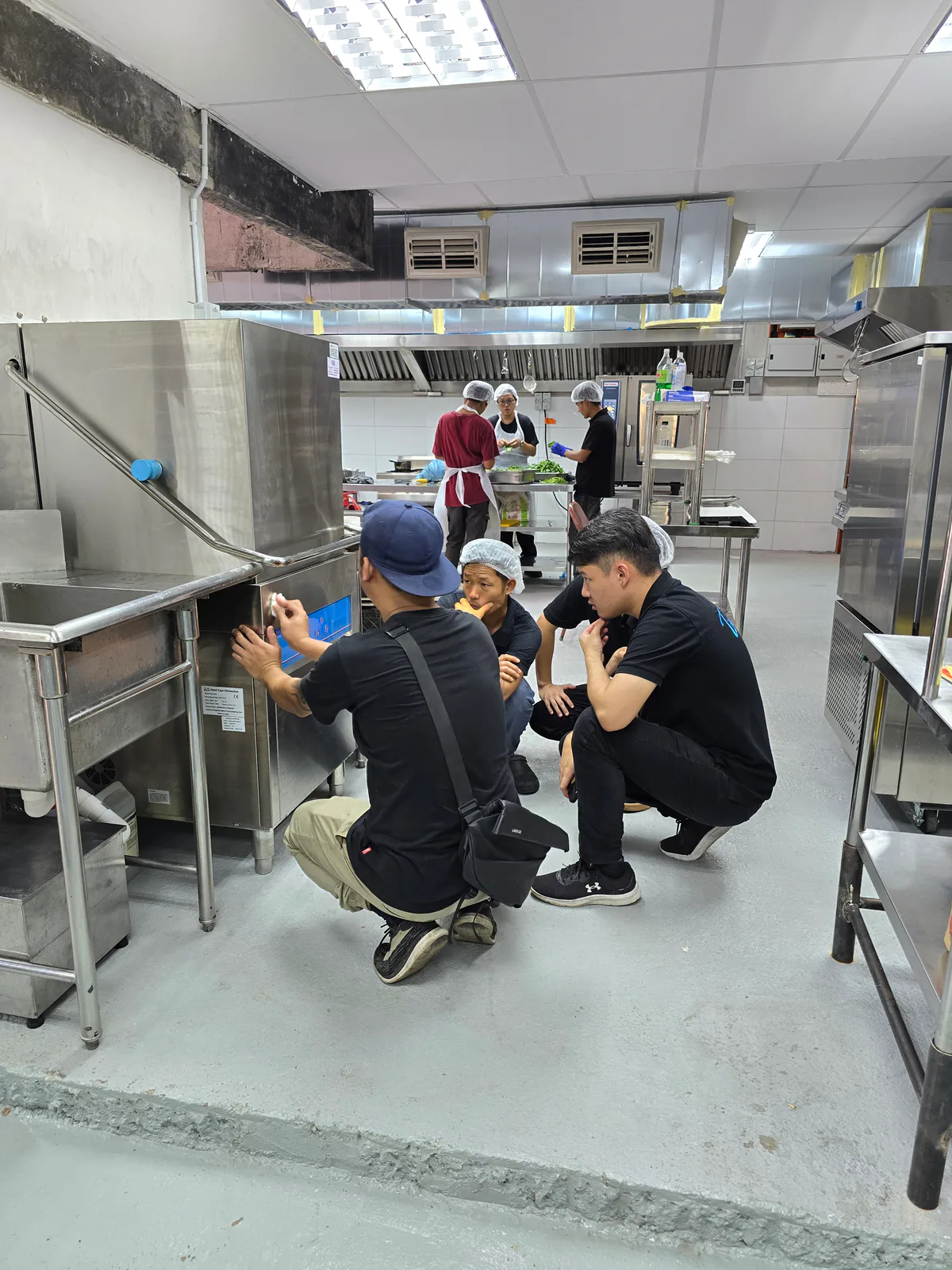
Assign responsibilities
Designate a staff member for each shift to oversee dishwasher cleaning and maintenance checks, with a backup when they are unavailable.
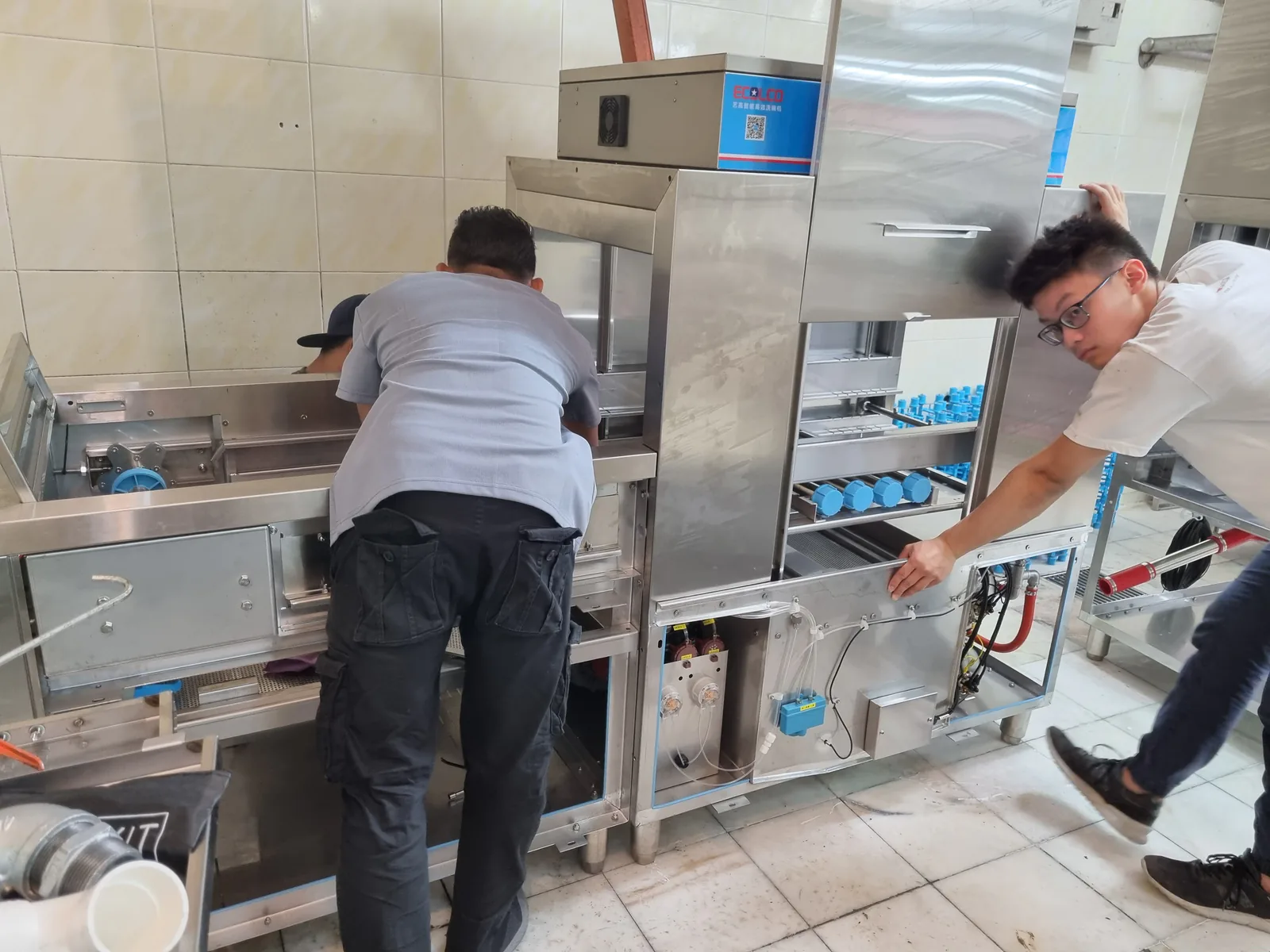
Set a maintenance schedule
Include daily cleaning in closing duties, and schedule weekly and monthly checks during quieter periods.

Keep a maintenance log
Record the date, completed tasks, staff initials and any issues noticed, such as leaks, unusual noises or error codes. These records also help technicians identify recurring problems.
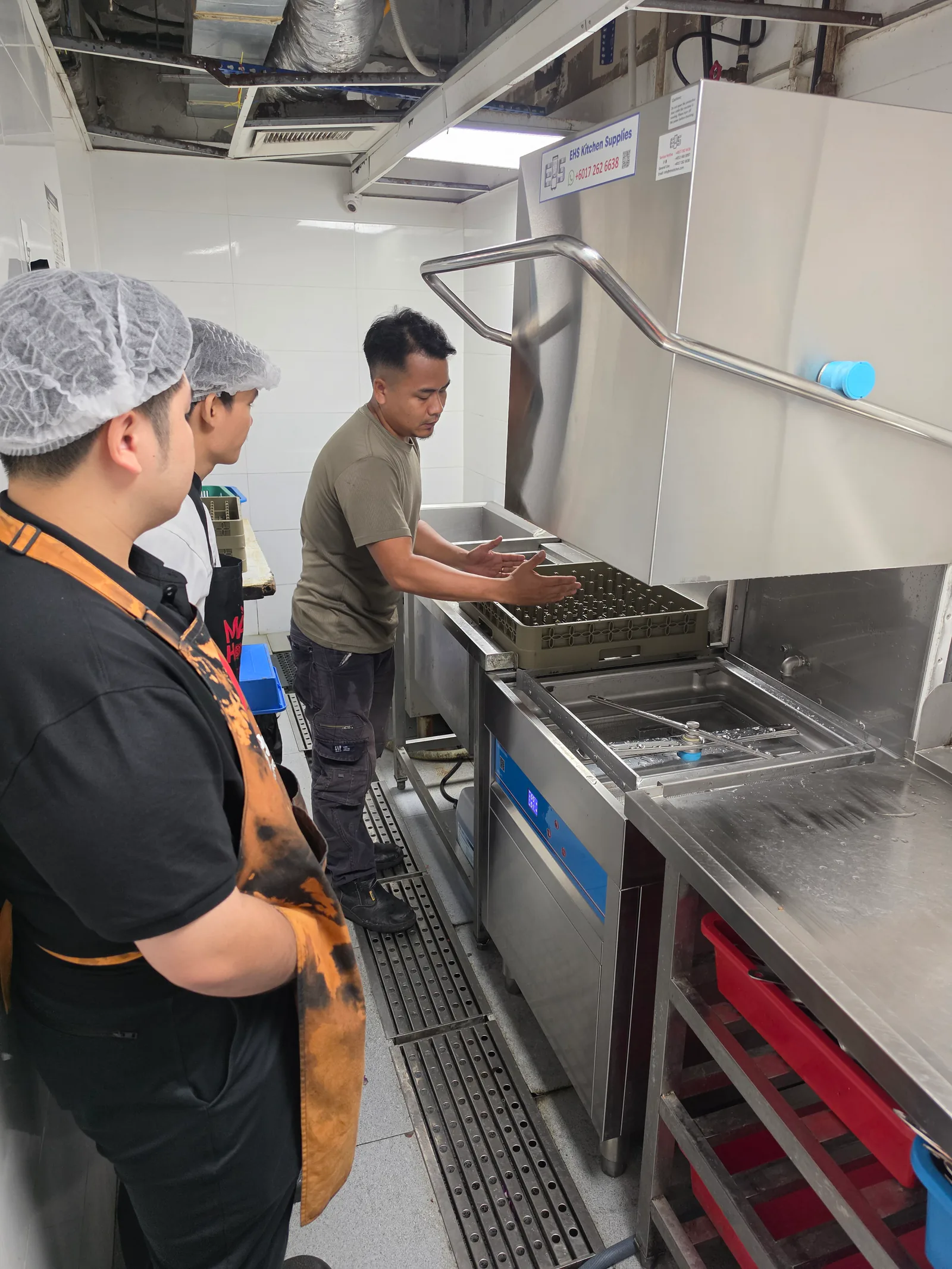
Train your staff
Show new team members how to clean, inspect and operate the dishwasher safely according to the manufacturer's instructions.
Servicing and Support from EHS Kitchen
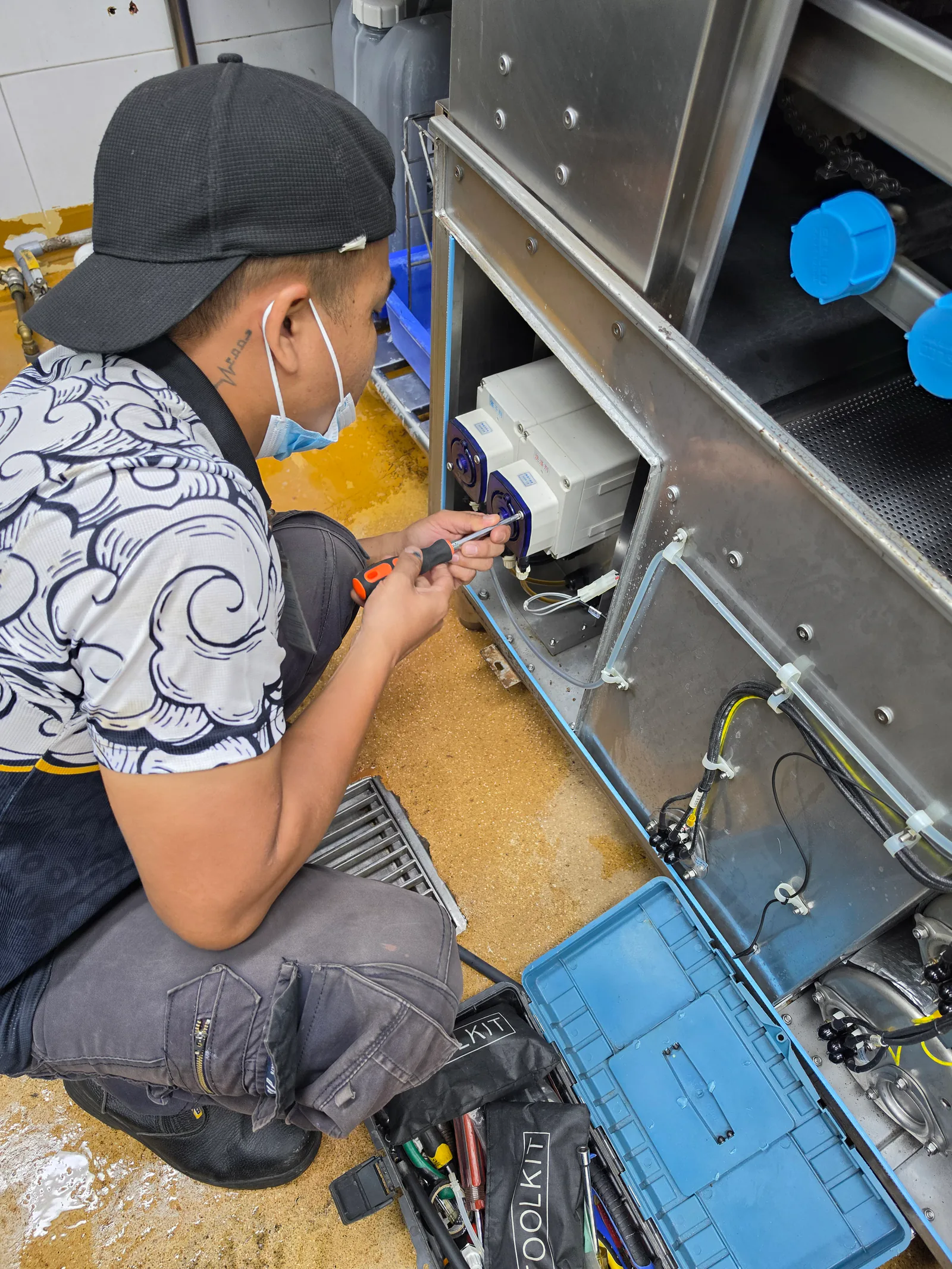
Regular maintenance helps prevent common dishwasher problems, but technical repairs and servicing should be handled by trained technicians.
EHS Kitchen's rental programme includes preventive maintenance, breakdown assistance and staff training, depending on the approved plan. For purchased machines, customers can also enquire about warranty coverage and servicing arrangements.
For F&B businesses in Malaysia, EHS Kitchen is the sole authorised distributor of ECOLCO commercial dishwashers, providing under-counter dishwashers for smaller kitchens, hood type dishwashers for medium-sized operations and rack conveyor dishwashers for high-volume kitchens.
Frequently Asked Questions (FAQ)
How often should a commercial dishwasher be cleaned?
A commercial dishwasher should be cleaned daily after service, with additional weekly and monthly maintenance checks. The exact cleaning frequency depends on the machine's usage, water hardness and manufacturer's recommendations.
What should be included in a commercial dishwasher maintenance log?
A maintenance log should record the inspection date, completed tasks, responsible staff member, any problems identified and follow-up actions. These records help kitchen operators track recurring issues and provide useful information during professional servicing.
Why is my commercial dishwasher not cleaning dishes properly?
Common causes include overloaded racks, blocked spray nozzles, dirty filters or insufficient detergent. Check these areas first. If cleaning results remain poor, contact a qualified technician to inspect the machine.
How do I know if my commercial dishwasher needs descaling?
White, chalky deposits inside the tank or on spray arms are common signs of limescale build-up. Follow the manufacturer's instructions for descaling, as the required frequency depends on water hardness and machine usage.
How often should a commercial dishwasher be professionally serviced?
Professional servicing should follow the manufacturer's recommended schedule. Kitchens with frequent or heavy dishwasher usage may require more regular inspections to maintain performance and identify potential problems.
Can kitchen staff carry out commercial dishwasher maintenance themselves?
Yes. Trained kitchen staff can handle routine cleaning and basic checks, such as clearing filters, inspecting accessible spray arms and checking chemical levels. Electrical repairs, pump problems and internal component servicing should be handled by qualified technicians.
Where can I get help choosing the right commercial dishwasher in Malaysia?
EHS Kitchen, the authorised distributor of ECOLCO commercial dishwashers in Malaysia, can assess your kitchen's requirements and recommend a suitable under-counter, hood type or rack conveyor dishwasher.
Businesses that want to avoid a large upfront investment can also consider EHS Kitchen's commercial dishwasher rental programme, which includes installation, staff training and ongoing maintenance support, depending on the approved plan.